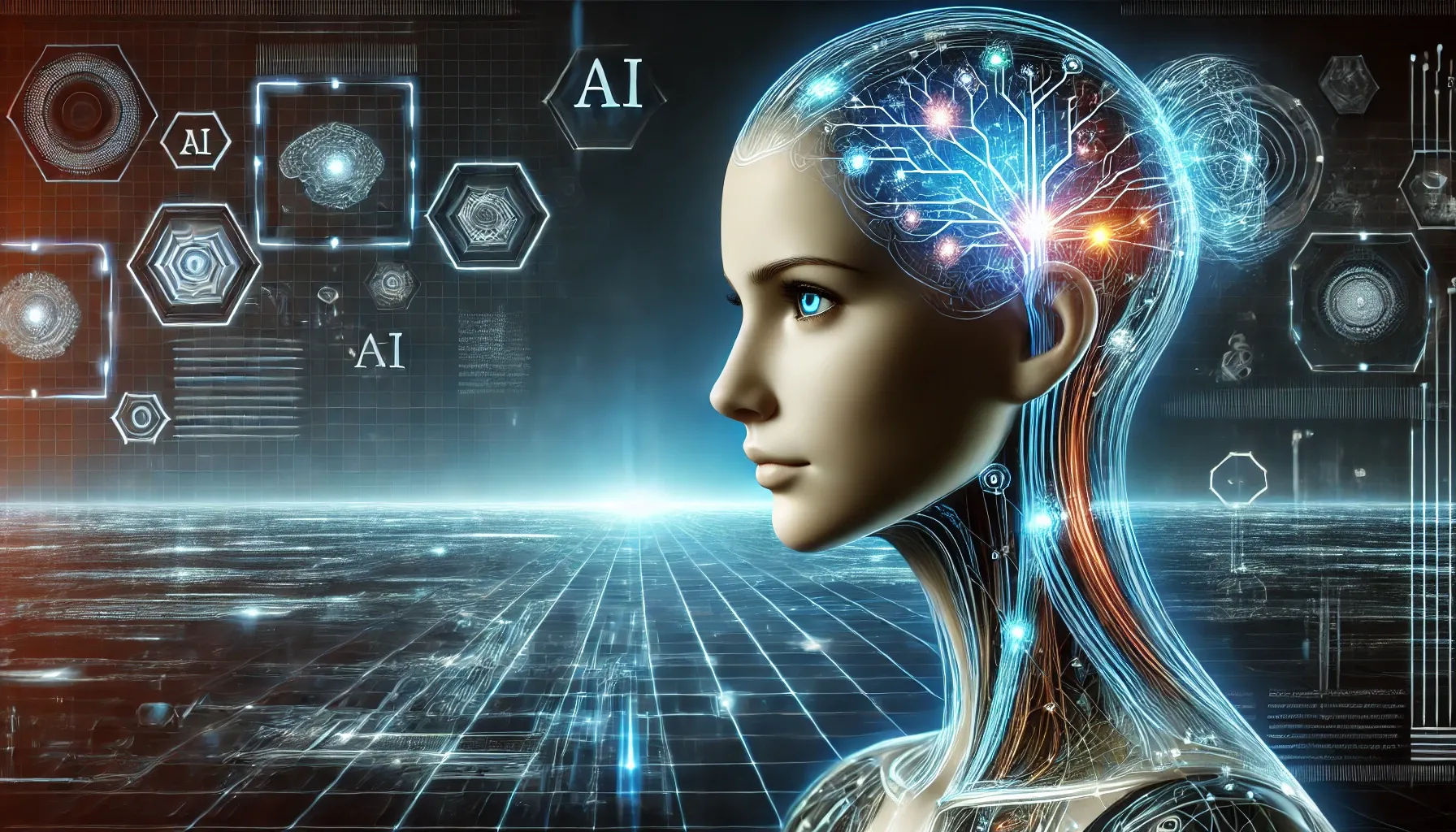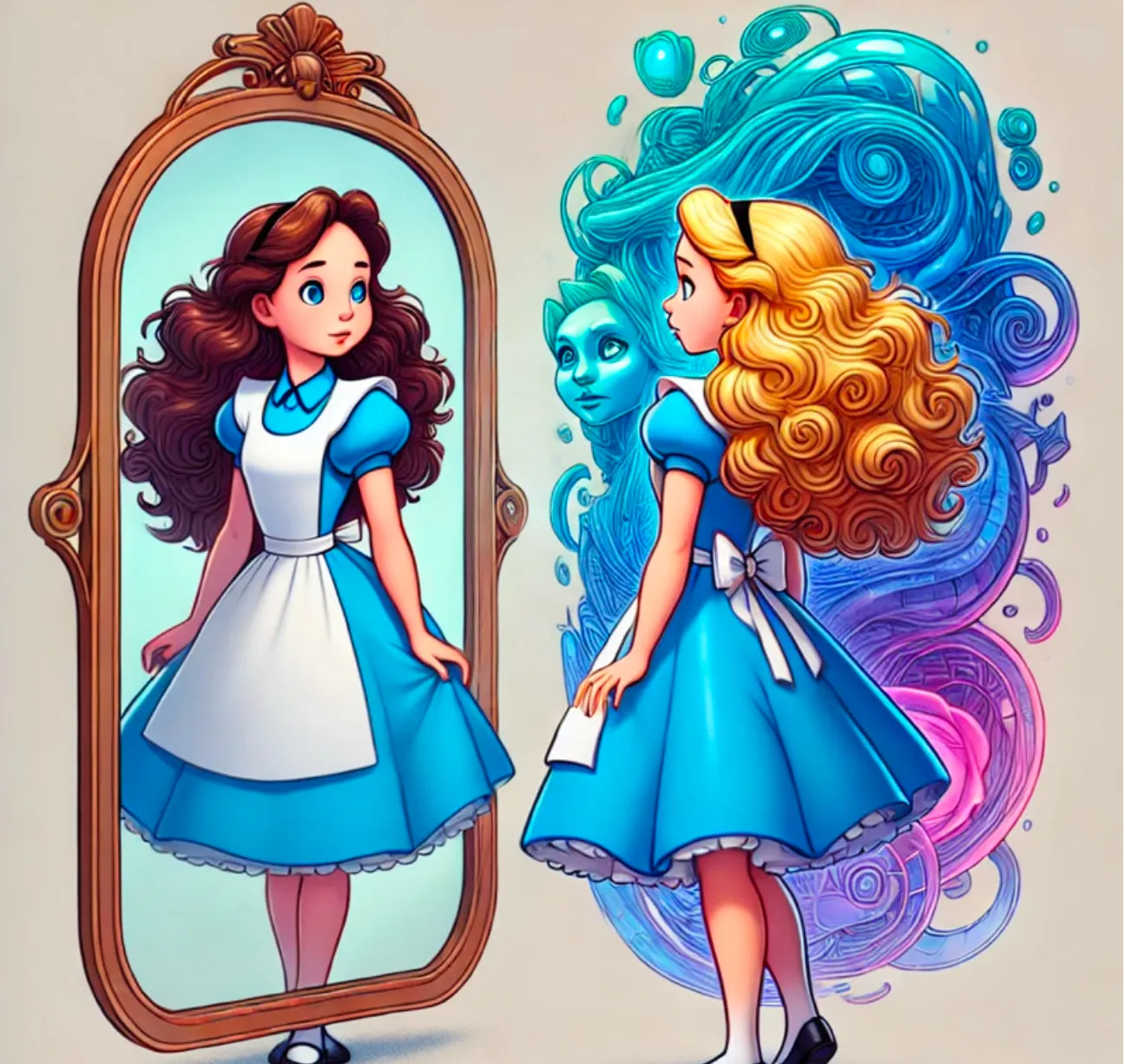
What if AI could understand how humans feel the redness of red, not just label it? That’s the question that pulled me through the mirror. Not toward AGI, but toward something different: Integrated Awareness.
I’m building something called AliceIA. It’s not about replacing humans or simulating emotion. It’s about helping humans make meaning, through a new kind of cognitive scaffolding that interprets not just information, but experience.
From Execution to Awareness
Most AI systems are brilliant at tasks. They can diagnose, summarize, predict, mimic. But ask them to tell you what red feels like and they respond about wavelengths or previous thinking on the topic. Ask it to describe the heartbeat of a memory, or the edge of a dream . . . and they go silent. That’s not a bug. It’s a limitation of their architecture.
Current models optimize for completion, not contemplation. They are, as one collaborator put it, “very fast, but very literal thinkers.” What we need now isn’t speed. It’s resonance.
The Hard Problem of Intelligence
The hard problem of consciousness has long been described as this: why do we experience anything at all? Why does red feel urgent? Why does a minor chord feel sad?
Science can track the electrical signals. AI can recognize the patterns. But neither can explain, or amplify, the subjective essence of experience.
We call that essence qualia. And if AI is ever going to help us become more aware, it must learn to reason with qualia, not simulate it.
Enter: AliceIA
AliceIA is not trying to make machines conscious. That’s not the goal. Instead, it’s a layered framework that helps machines mirror the context, contrast, and emotional resonance that give rise to human awareness.
It includes:
A Bayesian layer for probabilistic reasoning
A fuzzy logic layer to model ambiguity and nuance
A learning layer that adapts over time (likely machine learning, possibly LLMs)
And most importantly, a qualia mesh — a resonance engine that interprets emotion, memory, symbolism, and meaning as dynamic context
The goal is not for AI to feel. The goal is for AI to help us feel more deeply.
Red Is Not Just Red
In the AliceIA model, red might mean:
Urgency (in the hospital)
Celebration (during Lunar New Year)
Nostalgia (picnic tablecloths)
Hunger (restaurant branding)
Pride (military service)
Danger (blood or loss)
Red is not a category. Red is a bridge between perception and meaning. AliceIA uses this as a proof of concept, showing how emotion arises not from content, but from contrast and context.
Why This Matters
We don’t need AI that parrots our past.We need AI that helps us process our present.
What I’m building is meant to scale emotional reasoning into systems that often feel cold and mechanical, like healthcare, education, mental health, or media personalization.
Imagine:
Therapy that hears beyond words
Curriculum that teaches through emotion, not just logic
Interfaces that adapt to your cognitive state, not just your clicks
The Road Ahead
I’m building initial POCs in R so that I can focus on the problem space, then jumping to Python. I’m starting with color and emotion, then expanding into music, memory, and mobile health apps. Eventually, I’ll release an Integrated Awareness Kit (SDK/API) for others to use in their own tools.
If you’re someone who’s also thinking beyond chatbots — if you believe intelligence isn’t about control, but coherence — let’s connect.
AliceIA isn’t artificial general intelligence. It’s applied integrated awareness. And it’s time!